
A Factory-Side Guide to Luxury Christmas Advent Calendar Boxes
A luxury Christmas advent calendar is more than a box with 24 compartments. For a premium brand, the packaging is part of the product experience.
From the outside, an advent calendar may look like a simple seasonal gift box. From the factory side, however, it can involve structural development, multiple components, precise compartment sizing, special finishing, insert production, sample approval, and careful bulk assembly.
For brands developing a custom luxury Christmas advent calendar, understanding the manufacturing process can make the project easier to quote, sample and produce.

A standard Christmas gift box usually has one main storage space. An advent calendar has multiple individual compartments or drawers, which means the internal structure becomes just as important as the exterior appearance.
A premium advent calendar may include:
- 12 or 24 individual drawers
- Foldable or rigid structures
- Magnetic closures
- Double-door opening structures
- Paperboard or rigid cardboard construction
- Custom inserts or trays
- Foil stamping and embossing
- Premium paper wrapping
- Printed inner and outer surfaces
- Ribbon pulls, handles or other opening details
The structure needs to balance appearance, usability, strength and production cost.
This is why a custom advent calendar box should normally be developed from the products it will contain rather than selected from a standard catalog size.
Start With the Products Inside

The first question a packaging factory needs to answer is not simply, “What size should the calendar be?”
It is:
What will each compartment contain?
Candles, skincare products, jewelry, chocolates, tea, cosmetics and small lifestyle products all require different internal dimensions.
Before developing the box structure, a brand should provide:
- Product dimensions
- Product weight
- Number of compartments
- Preferred opening style
- Quantity
- Artwork or branding requirements
- Desired printing and finishing
- Shipping or packing requirements
Accurate measurements are especially important for advent calendars because a small change in product size can affect the entire internal layout.
Common Luxury Christmas Advent Calendar Structures
There is no single structure that works for every brand. The most suitable option depends on the product, target price and customer experience.
1. Drawer-Style Advent Calendar
A drawer-style calendar uses multiple individual drawers that pull out from the main structure.
It creates a strong unboxing experience and can be suitable for cosmetics, jewelry, candles, tea and other small products.
The number and size of drawers can be customized according to the products inside.
2. Double-Door Magnetic Advent Calendar
A double-door magnetic calendar opens from the center and reveals the compartments inside.
This structure can create a more substantial luxury appearance and gives the front of the calendar a large area for branding and seasonal artwork.
For premium Christmas collections, magnetic closures, foil stamping and specialty papers can be combined to create a high-end presentation.
3. Foldable Advent Calendar
A foldable structure can reduce the shipping volume compared with a fully rigid construction.
This can be particularly useful when the finished advent calendar is large or when the brand needs to ship relatively small quantities by air.
The factory needs to consider the folding points, board thickness, magnetic closure, internal support and final assembly together.
Rigid Board and Paper Selection
Luxury advent calendar boxes commonly use greyboard or other rigid paperboard as the structural base, wrapped with printed or specialty paper.
The board thickness affects:
- Structural strength
- Box weight
- Folding performance
- Drawer stability
- Overall luxury feel
- Shipping weight and cost
The outer paper can then be customized with printing, textured paper, soft-touch finishes, foil stamping or other treatments.
The right material is therefore not simply the most expensive one. It should match the structure, product weight, target price and desired appearance.
Luxury Finishing Options
For premium Christmas advent calendar packaging, surface finishing can have a major effect on the perceived value of the box.
Common options include:
Foil Stamping
Gold, silver and other metallic foils can highlight a logo, Christmas pattern, product name or decorative elements.
Embossing and Debossing
Embossing adds a raised effect, while debossing presses the design into the paper surface.
These techniques can be particularly effective when combined with a simple logo or pattern.
Matte Lamination
Matte lamination creates a smooth, understated appearance and can work well for luxury skincare, jewelry and lifestyle brands.
Specialty Paper
Textured, uncoated, pearlescent or other specialty papers can change the appearance and tactile experience of the calendar.
A luxury finish should always be considered together with the paper and board. Not every finishing process is suitable for every material.
Why the Internal Structure Matters
For an advent calendar, the inside is not secondary packaging.
Customers interact with the compartments every day during the countdown to Christmas.
The internal structure therefore needs to answer several questions:
- Are the drawers easy to open?
- Are the products securely positioned?
- Are the compartments large enough?
- Can the structure support the product weight?
- Does the calendar remain stable when opened?
- Can the finished box survive transportation?
For products with different shapes or sizes, a custom insert or tray may be required.
A beautiful exterior cannot compensate for an internal structure that is difficult to use.
Sampling a Custom Advent Calendar
For a custom luxury advent calendar, sampling is an important part of the development process.
A typical process may include:
Product information → Structural proposal → Dieline → White sample → Artwork → Printed sample → Approval → Bulk production
A white sample is useful for checking the physical structure before investing in final printing and finishing.
The brand can check:
- Overall dimensions
- Drawer size
- Opening experience
- Product fit
- Magnetic closure
- Internal layout
- Structural strength
After the structure is approved, a printed sample can be produced to evaluate the actual colors, paper, printing and finishing.
This process helps identify structural problems before bulk production begins.
Digital Sample vs. Physical Production Sample
Brands should also distinguish between a digital mockup and a physical production sample.
A digital visualization can be useful for confirming the general appearance, but it cannot fully demonstrate:
- Actual board strength
- Paper texture
- Foil stamping
- Embossing
- Magnetic force
- Drawer movement
- Assembly quality
For a luxury advent calendar, a physical sample is usually the safer way to approve the final structure and finish before mass production.
Shipping Considerations for Advent Calendar Boxes
Shipping can become an important part of the total packaging cost because advent calendars are often relatively large compared with the products inside.
A rigid calendar may occupy considerable shipping volume even when the individual products are lightweight.
This is where the choice between a rigid, foldable or partially collapsible structure becomes important.
A factory can evaluate:
- Finished box dimensions
- Packed carton dimensions
- Quantity per carton
- Gross weight
- Volumetric weight
- Pallet requirements
- Air or sea shipment
For brands ordering several hundred units, the difference in shipping volume between two structures can have a meaningful effect on the landed cost.
Customization and Artwork
The artwork should be developed according to the final approved dieline.
Important areas may include:
- Front cover
- Back panel
- Side panels
- Drawer fronts
- Interior doors
- Individual compartment numbers
- Internal printed panels
- Logo placement
- Barcode or regulatory information
If foil stamping or embossing is required, the factory may also need separate production files for those processes.
The final artwork should therefore be checked against the approved structure before mass production.
What Should a Brand Ask an Advent Calendar Factory?
Before placing an order, it is useful to ask the packaging manufacturer:
- Where will the box be manufactured?
- Who develops the structure?
- Who produces the dieline?
- Where is the printing completed?
- Who makes the inserts?
- Can you provide a physical sample?
- What board and paper will be used?
- Which finishing processes are available?
- How will the boxes be packed for shipment?
- What is the MOQ?
- What is the production lead time?
- What information is included in the final quotation?
These questions help a buyer understand whether they are working directly with a manufacturing facility or simply purchasing through a trading intermediary.
Custom Advent Calendar Boxes From a Packaging Factory
For a custom Christmas advent calendar, the factory’s role goes beyond printing a logo on an existing box.
The packaging manufacturer needs to connect the product dimensions, structural design, materials, printing, finishing, assembly and shipping requirements into one production process.
At Jiayi Packaging, custom packaging projects can be developed around the customer’s product and desired presentation, including magnetic boxes, drawer boxes, rigid boxes, foldable structures and custom inserts.
For brands developing a luxury Christmas advent calendar, the best starting point is not a catalog size.
It is the product inside.
Once the product dimensions, quantity, opening style and desired finish are clear, the factory can evaluate the structure, prepare the sample and work toward a production-ready specification.
FAQ About Luxury Christmas Advent Calendar Boxes
What is a luxury Christmas advent calendar box?
A luxury Christmas advent calendar box is a premium custom package containing multiple individual compartments, drawers or sections that are opened during the countdown to Christmas. The structure, materials, printing and finishing can all be customized for the brand.
Can advent calendar boxes be fully customized?
Yes. The dimensions, number of compartments, opening structure, materials, printing, finishing, inserts and closure can be customized according to the products and brand requirements.
What is the difference between a rigid and foldable advent calendar?
A rigid advent calendar generally provides a more substantial structure and premium presentation. A foldable design can reduce the shipping volume and may be more economical when transportation cost is important.
Can I add gold foil stamping to an advent calendar?
Yes. Foil stamping can be used on logos, text and decorative elements, depending on the selected paper and production structure.
How many compartments can a custom advent calendar have?
The number can be customized. Twelve- and 24-compartment designs are common, but the final number depends on the brand’s product assortment and desired customer experience.
What information does a factory need for a quotation?
At minimum, provide the product dimensions, desired box structure, quantity, artwork status and preferred printing or finishing. Product photos or samples can also help the factory understand the packaging requirements.
Start Your Custom Advent Calendar Project
If you are developing a luxury Christmas advent calendar for a new product launch or seasonal collection, start with the products and the customer experience you want to create.
Send the product dimensions, quantity, preferred structure and any reference images to the packaging factory. From there, the structure, materials, finishing and sample can be evaluated before bulk production.
For a completed fold-flat calendar structure, see the fold-flat Christmas Advent Calendar box project.
Looking for custom Christmas advent calendar boxes? Contact Jiayi Packaging to discuss your project and request a quotation.
Related Packaging
Explore packaging related to this guide.
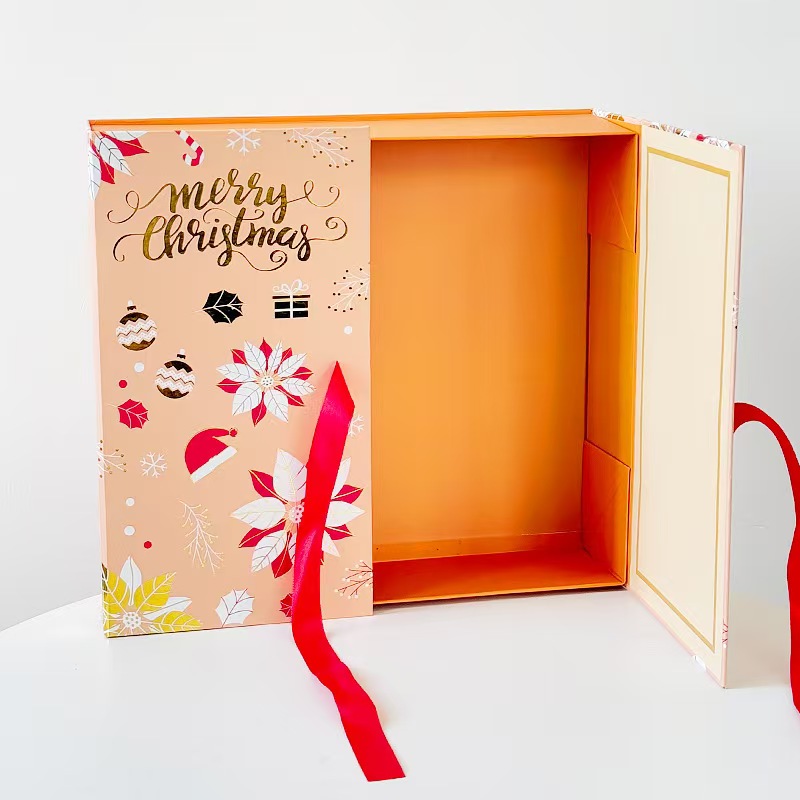
Project
Luxury Fold-Flat Christmas Advent Calendar Box
A fold-flat Christmas advent calendar developed for a premium seasonal presentation.
View Project
Solution
Custom Solutions
Explore packaging developed around a product category, from the format to the finished presentation.
Explore Solution
Product
Custom Gift Boxes
Rigid and folding gift boxes for products that need a finished presentation.
View ProductHave a Packaging Project in Mind?
Tell us what you're packaging, the quantity you need and the structure or look you have in mind.