
Custom Folding Gift Boxes: One-Piece, Six-Panel, Seven-Panel and Folding Lid-and-Base Structures
When developing a custom gift box, the first things people often consider are the color, material, printing, logo, and finishing.
But there is another part of packaging design that is equally important: the box structure.
A folding gift box can be designed in many different ways. The number of panels, the position of the folding lines, the opening direction, and the closing mechanism can all affect how the finished package looks and functions.
For brands importing packaging internationally, the folding structure can also affect shipping volume, storage space, assembly, and overall packaging costs.
At Jiayi Packaging, we develop and manufacture custom packaging for brands and businesses, including gift boxes, magnetic boxes, paper boxes, round paper tubes, and custom inserts. This article looks at four folding structures that can be considered for custom gift box projects: one-piece folding boxes, six-panel folding boxes, seven-panel folding boxes, and folding lid-and-base boxes.
What Is a Folding Gift Box?
A folding gift box is designed to be folded into its final three-dimensional shape rather than being permanently assembled before transportation.
The packaging is usually produced with pre-scored crease lines. During assembly, the connected panels are folded into position to create the finished box.
One practical advantage is that the packaging can often be shipped and stored in a more compact form than a fully assembled rigid box.
This can be useful for brands that:
- Import packaging over long distances
- Need to reduce shipping volume
- Have limited warehouse space
- Produce seasonal gift sets
- Require premium packaging with a folding construction
- Need packaging that can be assembled before filling
However, there is no single standard folding box structure. The construction can vary significantly depending on the product and the desired opening experience.
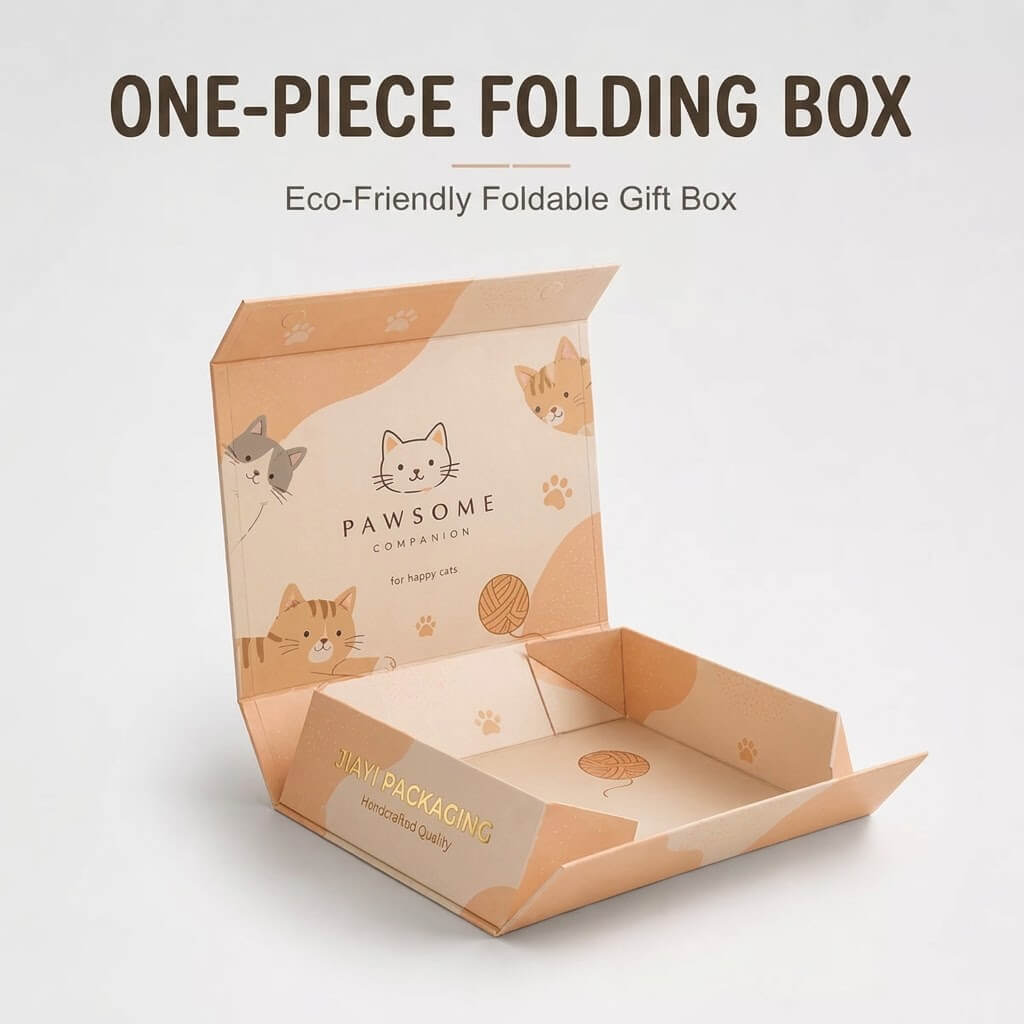
1. One-Piece Folding Box
A One-Piece Folding Box is made primarily from one connected piece of paperboard or laminated board.
When unfolded, the box appears as a single flat structure with connected panels. During production, crease lines and cutting lines are created so the package can be folded into its final shape.
Depending on the design, the box can use tuck-in tabs, locking tabs, slots, magnets, or other customized closure methods.
Why choose a one-piece structure?
A one-piece construction can provide several practical benefits:
- Fewer separate components
- Relatively simple assembly
- Efficient flat packing
- Reduced storage volume
- Flexible structural customization
- Fewer components to manage during production
A simple structure does not necessarily mean a simple appearance.
A one-piece folding box can still be customized with full-color printing, Pantone colors, matte or gloss lamination, foil stamping, embossing, debossing, spot UV, textured papers, and other finishing techniques.
For products that do not require extremely thick rigid walls, a one-piece folding box can provide a balance between appearance, functionality, and logistics.
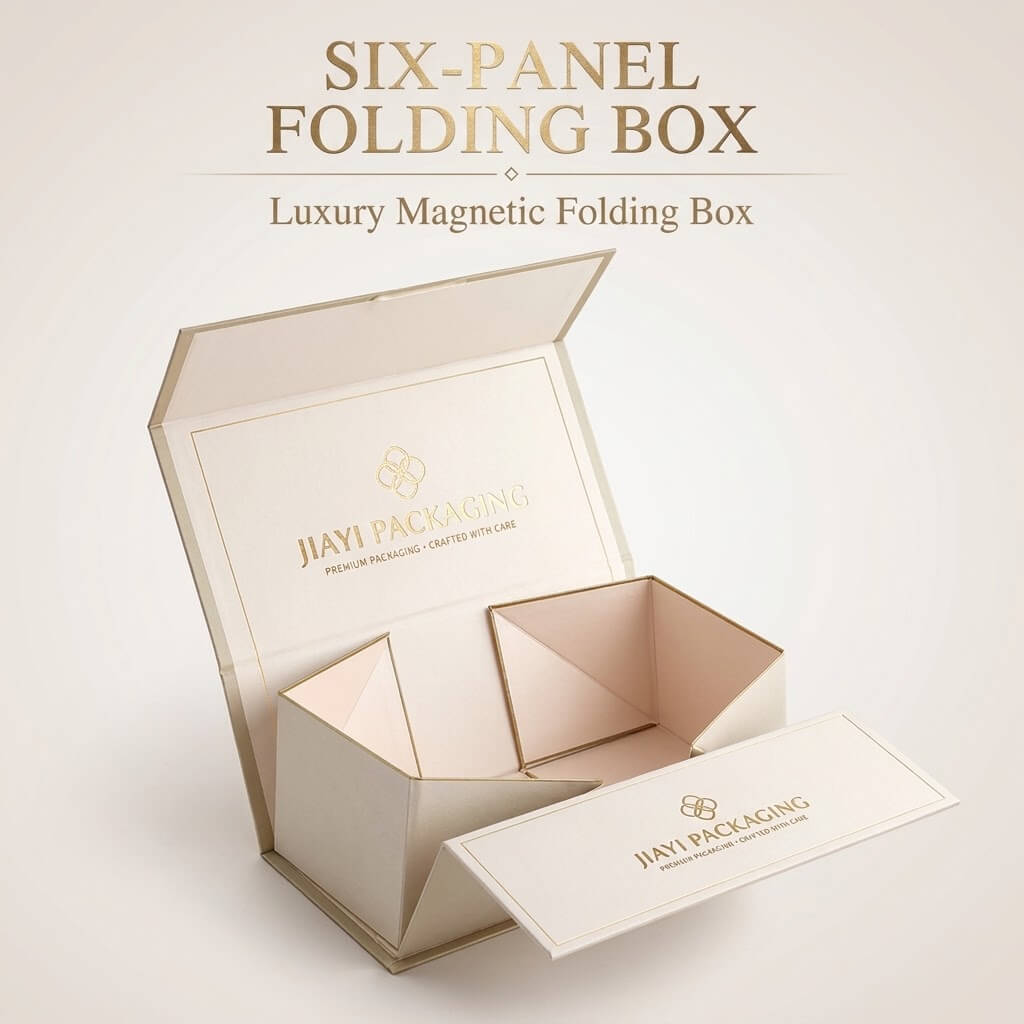
2. Six-Panel Folding Box
A Six-Panel Folding Box uses six connected structural panels that work together to create the finished package.
The panels are not necessarily limited to the six visible sides of the completed box. Some panels can function as flaps, extensions, supports, closures, or structural connections.
This gives packaging designers more options when developing the opening and folding sequence.
A six-panel structure can be designed for:
- Different opening directions
- Integrated closing flaps
- Layered presentation
- Additional support
- Fold-over covers
- Special opening effects
For example, instead of simply lifting a conventional lid, the package may unfold through several connected sections before the product is revealed.
This can make the opening process part of the overall packaging experience.
However, additional panels also require more attention to structural details.
The position of each crease, the thickness of the board, the grain direction of the material, the folding sequence, and the production tolerance all need to work together.
A structure that looks correct in a digital dieline may behave differently when produced with actual materials.
For this reason, physical sampling is particularly useful when developing more complex folding structures.
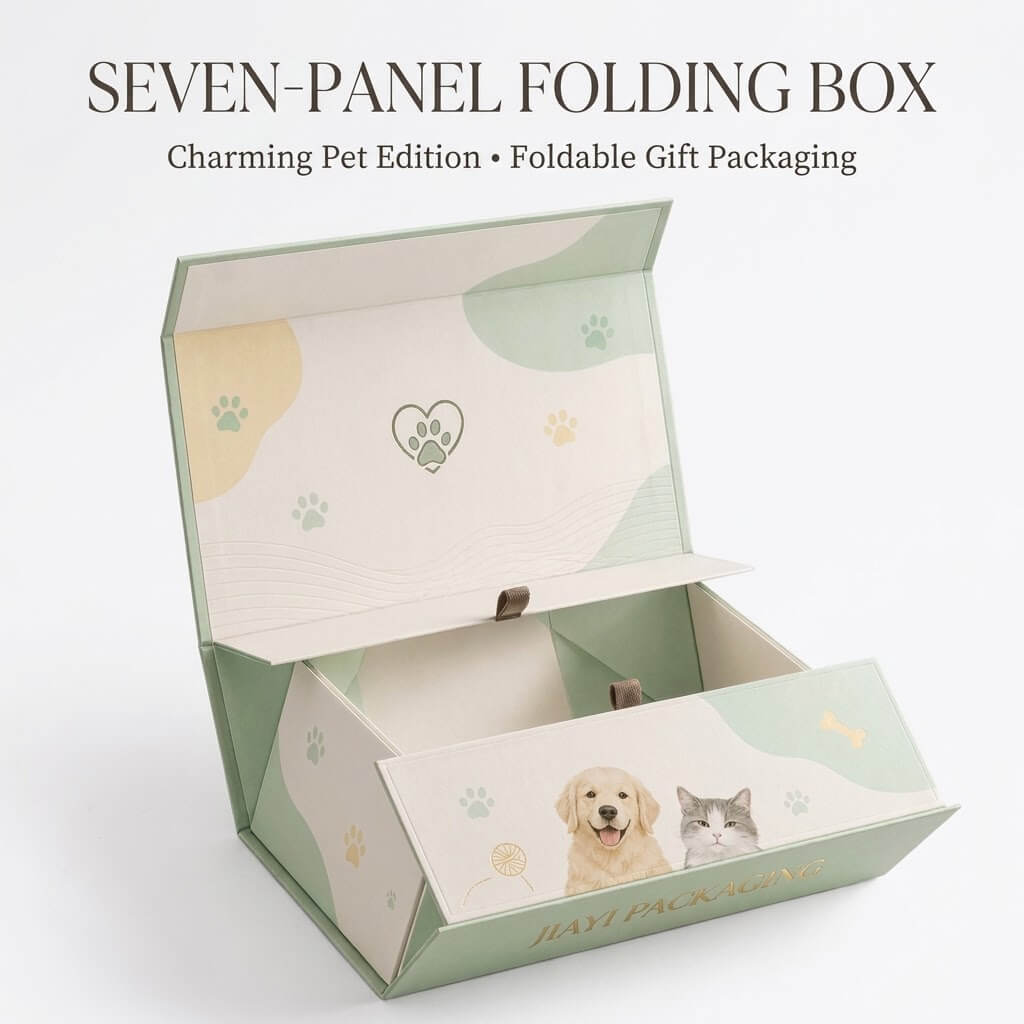
3. Seven-Panel Folding Box
A Seven-Panel Folding Box adds another connected structural panel, creating more possibilities for folding and presentation.
The additional panel can be used in different ways depending on the design. It may provide additional structural support, extend a cover, create a special opening mechanism, or form part of the internal or external presentation.
Seven-panel structures can be considered when a standard folding box does not provide enough flexibility for the desired opening sequence.
For example, a brand may want the packaging to unfold progressively, reveal different sections, or create a more distinctive product presentation.
The important point is that the number of panels itself does not determine whether a box structure is suitable.
Instead, each panel should have a clear purpose.
A good structural design considers:
- Product dimensions
- Product weight
- Board thickness
- Folding direction
- Opening sequence
- Closure method
- Insert design
- Transportation requirements
- Assembly method
The goal is not necessarily to create the most complicated folding structure.
The goal is to create a structure that works reliably in production and provides the intended experience when the customer opens the package.
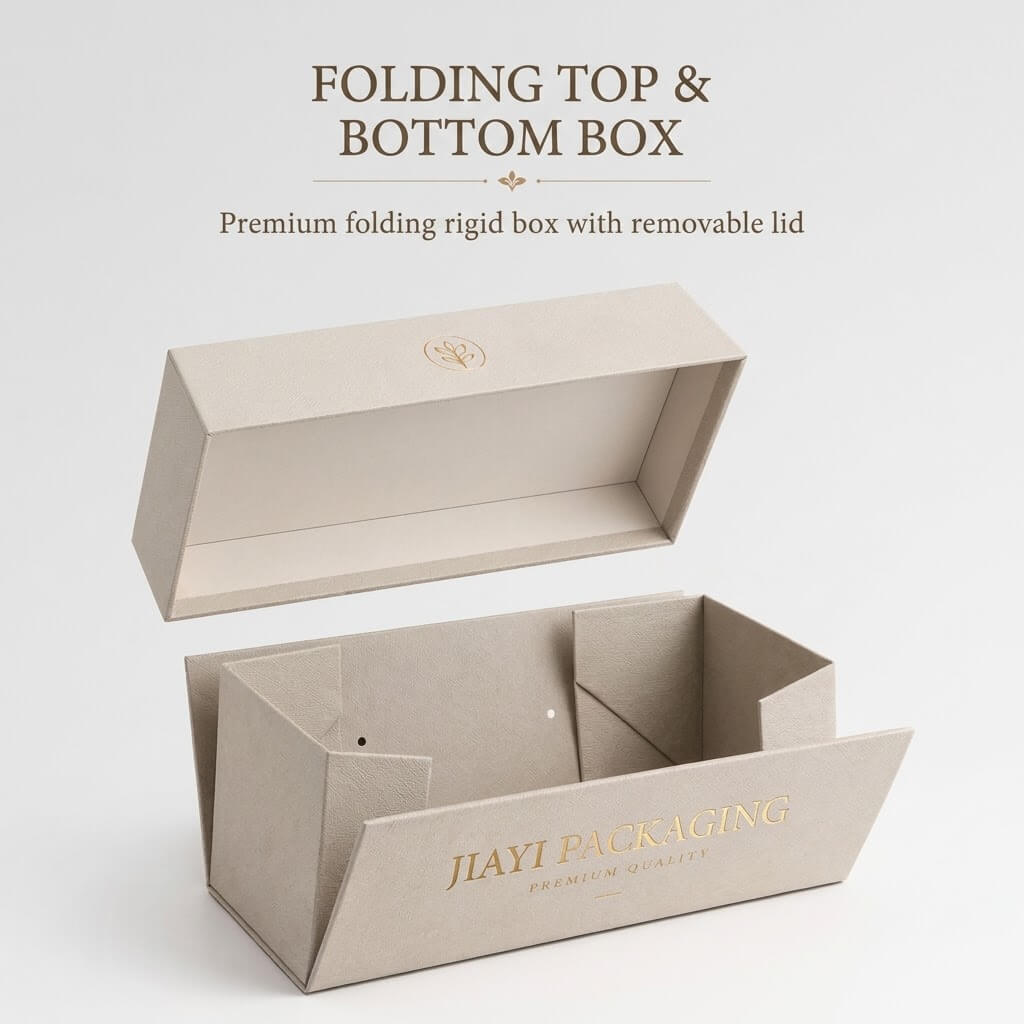
4. Folding Lid-and-Base Box
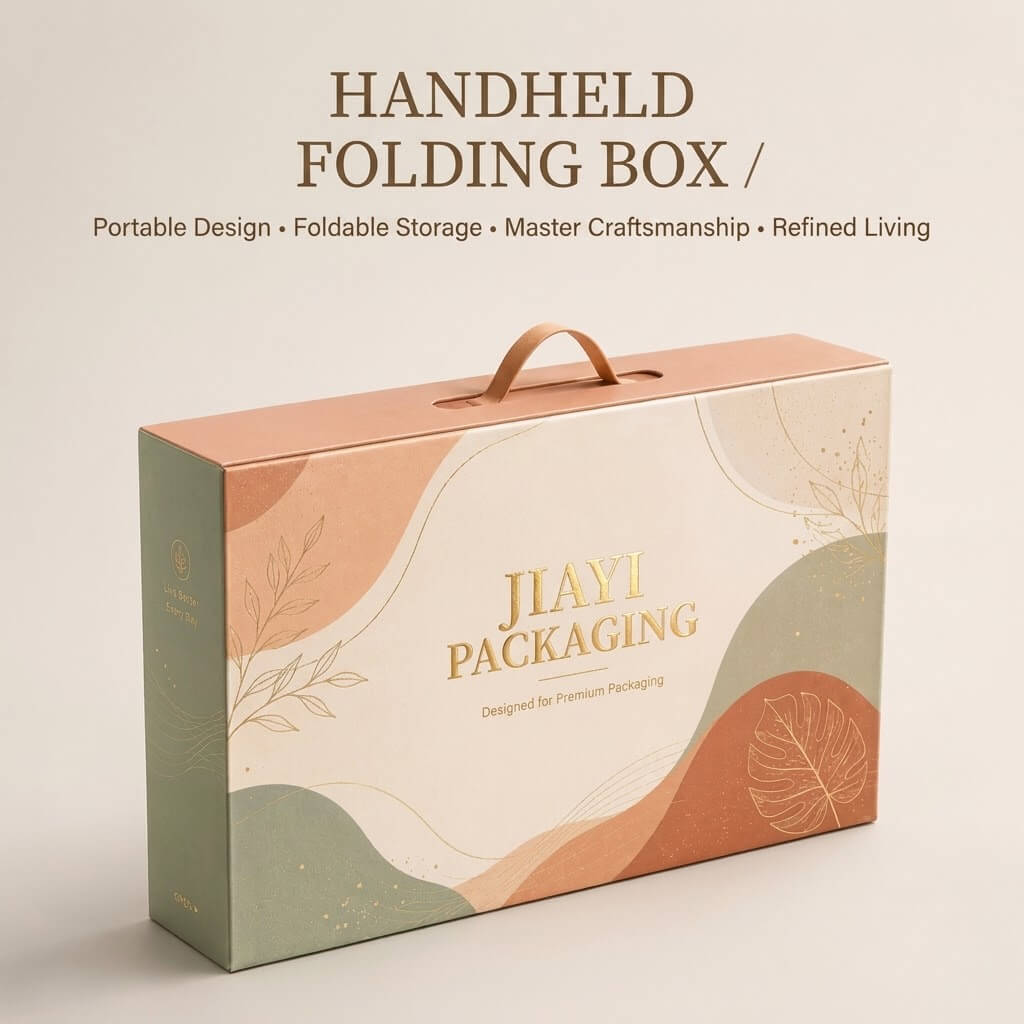
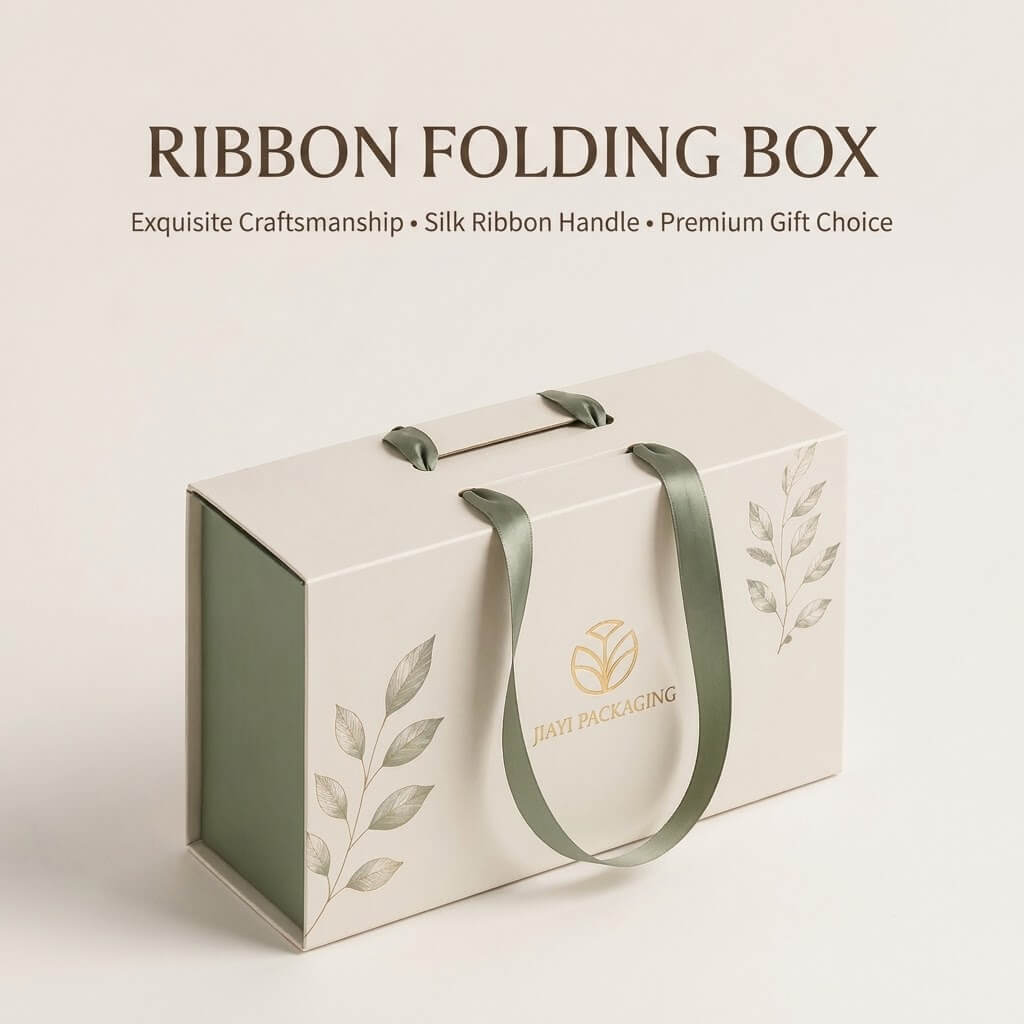
A Folding Lid-and-Base Box combines the familiar appearance of a traditional lid-and-base gift box with a folding construction.
A conventional rigid lid-and-base box normally consists of separate rigid components and is generally shipped in its assembled form.
A folding lid-and-base structure, however, can be designed so that the packaging can be folded or collapsed during transportation and storage.
This creates an interesting combination:
the appearance of a premium gift box with a more space-efficient transportation structure.
Depending on the design, the box can incorporate:
- Magnetic closures
- Ribbon pulls
- Paper hinges
- Fabric hinges
- Custom inserts
- Foil stamping
- Embossing
- Specialty papers
- Printed wrapping papers
This type of structure can be considered for premium gift sets, cosmetics, jewelry, candles, accessories, seasonal packaging, and other products where presentation is important.
Folding Gift Box vs. Non-Folding Rigid Box
The choice between a folding gift box and a non-folding rigid box should not be based only on appearance.
Both structures can be customized extensively, but they behave differently during transportation, storage, and assembly.
| Consideration | Folding Gift Box | Non-Folding Rigid Box |
|---|---|---|
| Shipping volume | Lower when folded | Usually higher |
| Storage | More space-efficient | Requires more space |
| Assembly | Usually requires folding | Normally arrives assembled |
| Structural customization | Flexible | Flexible |
| Premium appearance | Can be highly customized | Naturally rigid and substantial |
| Transportation | Often more efficient | Higher packaging volume |
| Typical applications | Gift sets, seasonal packaging, retail packaging | Luxury gifts, jewelry, cosmetics, premium products |
There is no single structure that works for every packaging project.
The right choice depends on the product, quantity, transportation method, storage conditions, assembly requirements, budget, and desired customer experience.
The Structure Should Start With the Product
One common mistake in custom packaging development is choosing a box structure first and trying to fit the product inside afterward.
A more practical approach is to start with the product.
Before developing a folding gift box, a packaging manufacturer may need information such as:
- Product length, width, and height
- Product weight
- How the product should sit inside the box
- How the box should open
- Number of products inside
- Whether an insert is required
- Product protection requirements
- Shipping method
- Expected order quantity
- Target packaging cost
- Desired appearance and finishing
A lightweight skincare set, for example, may require a very different structure from a heavy glass bottle, jewelry collection, candle, or multi-product gift set.
The interior should also be considered together with the outer box.
Paperboard inserts, molded pulp trays, EVA inserts, foam, or other custom interior solutions can be developed according to the product and the desired presentation.
Why Sampling Matters for Folding Boxes
For custom folding packaging, the dieline is only one part of the development process.
A digital dieline can show the cutting lines, folding lines, and overall structure, but it cannot always show how the finished material will behave.
Board thickness affects folding.
Paper grain direction can affect the crease.
Lamination can change the flexibility of the material.
Magnets, ribbons, inserts, and other components can also affect how the finished box opens and closes.
A physical sample can therefore help confirm:
- Product fit
- Opening and closing
- Folding sequence
- Magnetic alignment
- Insert positioning
- Structural stability
- Overall proportions
- Surface finishing
- Assembly requirements
If adjustments are needed, the structure can be modified before mass production.
This is particularly important for six-panel, seven-panel, and other customized folding structures where several components need to work together.
How to Choose a Folding Box Structure
When developing a new custom folding gift box, several questions can help define the right structure.
1. How should the box open?
Should it open from the top, front, side, or unfold completely?
The opening sequence can become part of the customer’s experience.
2. Is shipping volume important?
For international packaging projects, the volume of the packaging during transportation can be an important consideration.
3. What should the customer see first?
The position of the product, insert, cover, and internal elements can affect the visual sequence when the box is opened.
4. Does the product require internal protection?
If the product is fragile, heavy, or has an unusual shape, the insert should be developed together with the outer structure.
5. How will the boxes be assembled?
For larger production quantities, assembly time and labor requirements should be considered during the structural design stage.
Folding Is Only One Part of Packaging Design
A folding gift box is more than a box that can be folded flat.
Its structure needs to balance appearance, functionality, product protection, assembly, transportation, storage, and cost.
A one-piece folding box may work well for a straightforward packaging project.
A six-panel or seven-panel structure may provide additional possibilities for opening and presentation.
A folding lid-and-base box can combine the visual characteristics of a traditional premium gift box with the advantages of a folding construction.
The most complicated structure is not necessarily the right structure.
In practical packaging development, the better approach is to find a structure that can be produced consistently, protects the product, fits the logistics requirements, and creates the intended customer experience.
Custom Folding Gift Box Manufacturing by Jiayi Packaging
Jiayi Packaging develops and manufactures custom packaging for brands and professional buyers.
Custom projects can start from product dimensions, an existing dieline, a reference sample, a sketch, or a packaging concept.
The development process can include structural design, material selection, sampling, printing, surface finishing, custom inserts, mass production, quality control, and delivery.
Our main custom packaging products include gift boxes, magnetic boxes, folding boxes, paper boxes, round paper tubes, and custom inserts.
For a custom folding gift box, the objective is not simply to create something that looks good in a product photograph.
The structure also needs to work in production, protect the product, make sense for transportation and storage, and provide the intended experience when the customer opens the package.
That is why the right folding structure should always be considered from both the design side and the manufacturing side.